Food at a Scandinavian Christmas market is shaped by season, local supply and event format. A compact stall may focus on biscuits and warm drinks. A larger market can offer a wider range of meals, sweets and packaged goods. Menus are not standardized. The same food name may cover recipes that vary between households or vendors, so use stall descriptions as a starting point rather than a guarantee of ingredients.
Spiced baking and festive breads
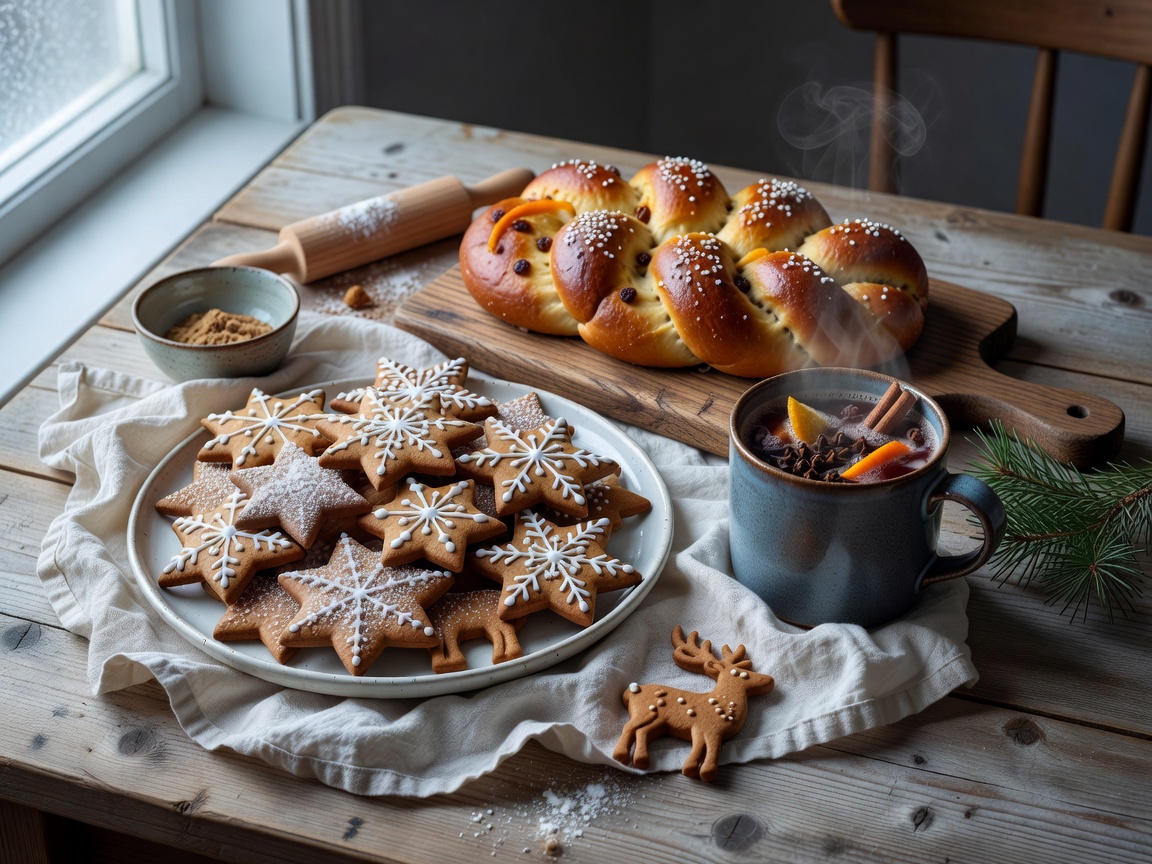
Gingerbread is a recognizable winter-season food across the region. Thin, crisp biscuits are commonly spiced with ginger and other warming spices; recipes vary in sweetness, shape and decoration. Cinnamon buns and other cinnamon-based baking may also be available, though everyday café baking and Christmas-specific recipes are not the same category. Ask which ingredients are used if you need exact information.
Swedish saffron buns, often called lussekatter, are associated with the Lucia season and are made with saffron in a yeasted dough. Their shape and finish can differ. In other settings, festive breads may include enriched doughs, dried fruit or regional flavourings. Market versions are often designed for takeaway and may not match home recipes. Finland, Denmark, Norway and Iceland each have their own bread and baking repertoires; one pastry should not be treated as representative of all five.
Cookies can include gingerbread, butter-based biscuits and other seasonal varieties. Some are decorated for family activities or sold in tins. Ingredients may include wheat, dairy, eggs, nuts or spices. Vendors may not be able to prevent cross-contact in a busy serving space.
Porridge and warming choices
Rice porridge is a familiar Christmas-season food in parts of Scandinavia. In Denmark, risalamande is a chilled rice pudding dessert often served with cherry sauce in Christmas contexts; recipes and service vary. Norwegian riskrem is another rice-based dessert, commonly served with red berry sauce. Swedish risgrynsgröt and Finnish riisipuuro are related rice-porridge traditions, with local variations in serving and custom. These dishes are not identical, and availability at a market is not assured.
Warm drinks may be non-alcoholic or alcoholic. Hot berry drinks, spiced apple drinks, coffee and tea are possible options. Glögg is a spiced warm drink found in Nordic seasonal settings; versions vary and may contain alcohol or be alcohol-free. Check the vendor’s ingredient and alcohol information. A beverage’s name does not by itself identify its exact recipe.
Savoury foods: meat, fish and preservation
Sausages, grilled or roasted meats and other quick hot foods suit outdoor service. Their seasoning, meat content and accompaniments depend on the vendor. Smoked foods and preserved foods reflect techniques used to keep ingredients and provide distinctive flavours. Fish can be smoked, cured, pickled, salted or served in other preparations. Nordic food cultures have diverse fish traditions, but a market menu will only show a small part of them.
Preserved herring is particularly associated with Swedish and other northern European food traditions. Pickled herring comes in multiple preparations, often with a vinegar-based seasoning, onion or spices. Gravlax is a cured salmon preparation; it is not the same as smoked salmon. Exact ingredients, handling and service vary. Ask about fish species, allergens and storage practices at the stall.
Regional comparison and seasonal role
Denmark’s seasonal table may include pastries, baked goods and dishes such as risalamande in home celebrations. Swedish market food can include gingerbread, saffron buns and warm seasonal drinks. Norwegian offerings may bring together baking, porridge traditions, sausages and preserved fish. Finnish Christmas foods have distinct regional and household variations, while Icelandic seasonal food reflects its own ingredients and culinary context. These are broad examples, not a fixed menu or a ranking.
Market food serves practical purposes. A warm snack provides a pause during an outdoor visit. Baked goods travel well and suit gifting. Savoury dishes make a market stop into a meal. Packaged sweets and preserved products can be taken home, subject to customs and transport rules. The seasonal role is social as well as culinary: food gives visitors a reason to gather, share and linger.
Allergies and dietary needs
Do not assume that a dish is dairy-free, gluten-free, vegetarian or alcohol-free based on its name or appearance. Recipes change. Shared surfaces and serving tools can create cross-contact. Ask about the full ingredient list and preparation process. If a vendor cannot answer confidently, choose another option. For a serious allergy, carry the medical information and supplies recommended by your clinician.
Good For
Sampling regional baking, comparing sweet and savoury food styles, and taking a warm break during a winter visit.
What To Know
Recipes vary. Stall availability is seasonal and event-specific. Labels may not provide complete allergen or cross-contact details.
Planning Notes
Check vendor menus where available. Ask about allergens, alcohol and ingredients before ordering. Carry a payment method accepted locally and allow time for queues.