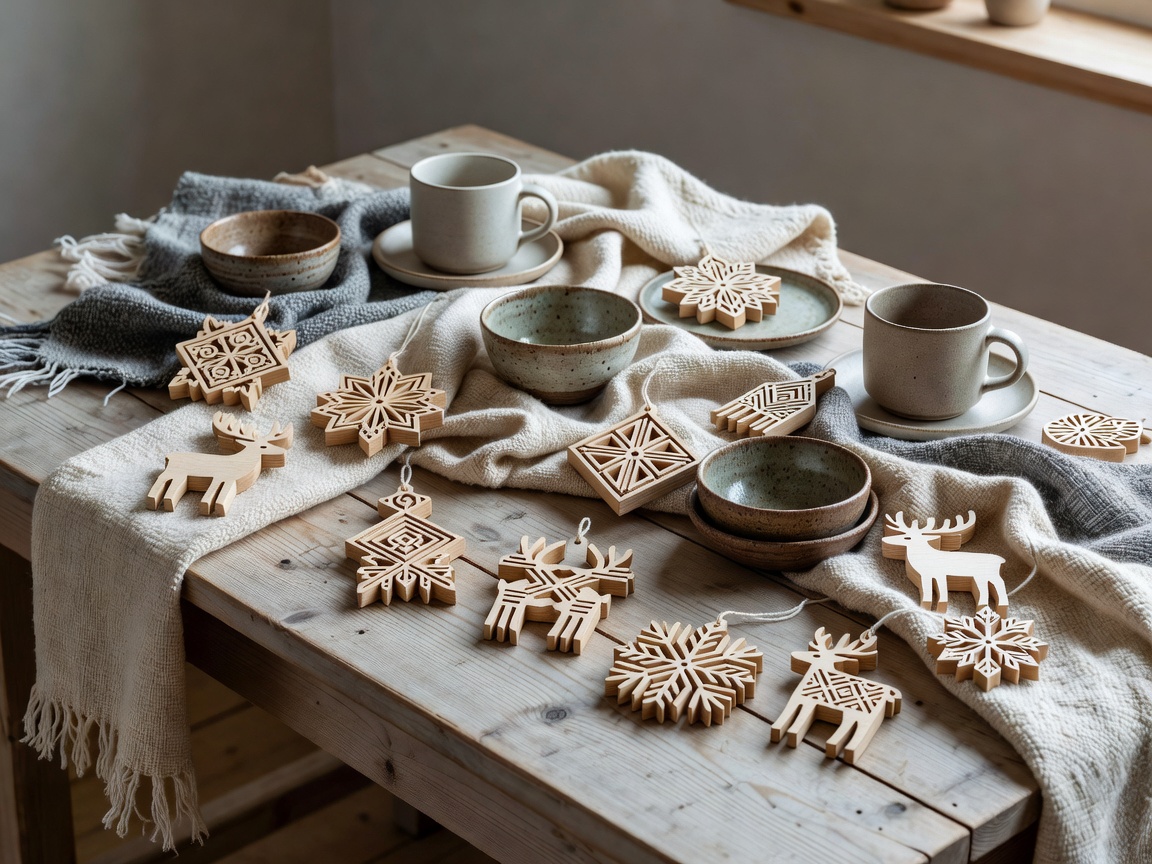
Christmas craft stalls can offer objects for decoration, practical use or gifting. Common categories include carved wood, woven and knitted textiles, ceramics, candles, paper decorations and ornaments made from natural materials. Nordic markets do not share one craft style. Local materials, climate, design influences and maker experience all affect what appears on a stall.
Wood, forest materials and useful objects
Woodwork ranges from small carved figures and ornaments to kitchen items and simple household objects. Species and finishing methods vary by maker and location. In forested areas, timber and branches may be familiar materials, but the exact wood used cannot be inferred from an item’s appearance. Ask the maker about wood type, finish and care, especially if an object will be used with food or near heat.
Natural materials can include straw, cones, bark, twigs and dried plants. They may become hanging decorations, wreath elements or table pieces. Availability is seasonal and local rules may restrict gathering in some places. Market products can use purchased or cultivated materials rather than locally gathered ones. A natural finish does not always mean that an object was made nearby.
Textiles and regional making
Wool is a practical material in cold climates and appears in knitted, woven or felted items. Hats, mittens, socks, scarves and small decorations can be found in seasonal craft settings. Patterns and techniques have specific histories and meanings in some communities. Avoid reading a motif as regional or traditional without reliable information from the maker or a knowledgeable local source.
Textile goods range from hand-spun, hand-dyed work to machine-made products and contemporary designs. These are different forms of production. Ask whether an item was made by the seller, produced in a workshop or sourced from another supplier. Clear answers help distinguish a maker’s work from resale.
Ceramics, candles and home decoration
Ceramics can include mugs, serving pieces, candle holders and small decorative forms. Clay bodies, glazes and firing methods affect use and care. A handmade item may have slight variations in shape or surface. Ask whether it is food-safe, dishwasher-safe or intended for display rather than assuming care instructions.
Candles and candle holders are familiar winter-season products. Their materials and burn characteristics vary. Follow the maker’s safety guidance, keep a burning candle attended and away from decorations, textiles and children. Wax type can include paraffin, plant-based waxes or beeswax, but appearance alone is not a reliable way to identify it.
Paper crafts include folded stars, cut-out forms, cards and hanging decorations. Some draw on established local techniques; others are contemporary interpretations. Paper is light to carry and easy to package, making it a practical market product. Check whether it is handmade, printed or assembled from manufactured components if provenance matters.
Traditional techniques and contemporary products
Traditional craft usually refers to a technique or form passed through practice over time, but each case needs its own context. A market listing may call an item traditional without explaining its history. Contemporary handmade work can still be skilled and place-specific without claiming an inherited tradition. Both can sit beside mass-produced ornaments and souvenirs at the same event.
Look at labels and ask direct questions: Who made this? Where? Which materials are used? Is the technique hand-worked or machine-assisted? Is the design based on a local practice, or is it a new interpretation? Respectful answers should describe the work without overstating cultural ownership or local origin.
Regional comparison
Material use follows local resources, skill and design culture. Wood and wool have broad relevance across northern climates, but methods and decorative forms differ. Finnish, Swedish, Danish, Norwegian and Icelandic makers work within distinct histories and contemporary design scenes. The same material may produce very different objects in different places. A Nordic label is not evidence that every item comes from the Nordic region.
Markets can also bring makers from outside the host area. This can broaden the offer, but it makes clear provenance useful. When buying a gift, ask about care, packaging and transport. Fragile ceramics need protection; candles and natural materials may have travel restrictions or customs rules depending on the destination.
Good For
Visitors who value practical handmade goods, seasonal decoration, materials and direct conversations with makers.
What To Know
Handmade, local and traditional are separate claims. Verify each one with the seller rather than inferring it from styling.
Planning Notes
Bring a reusable bag and allow room for fragile purchases. Check payment methods, return terms and any travel rules for natural products.