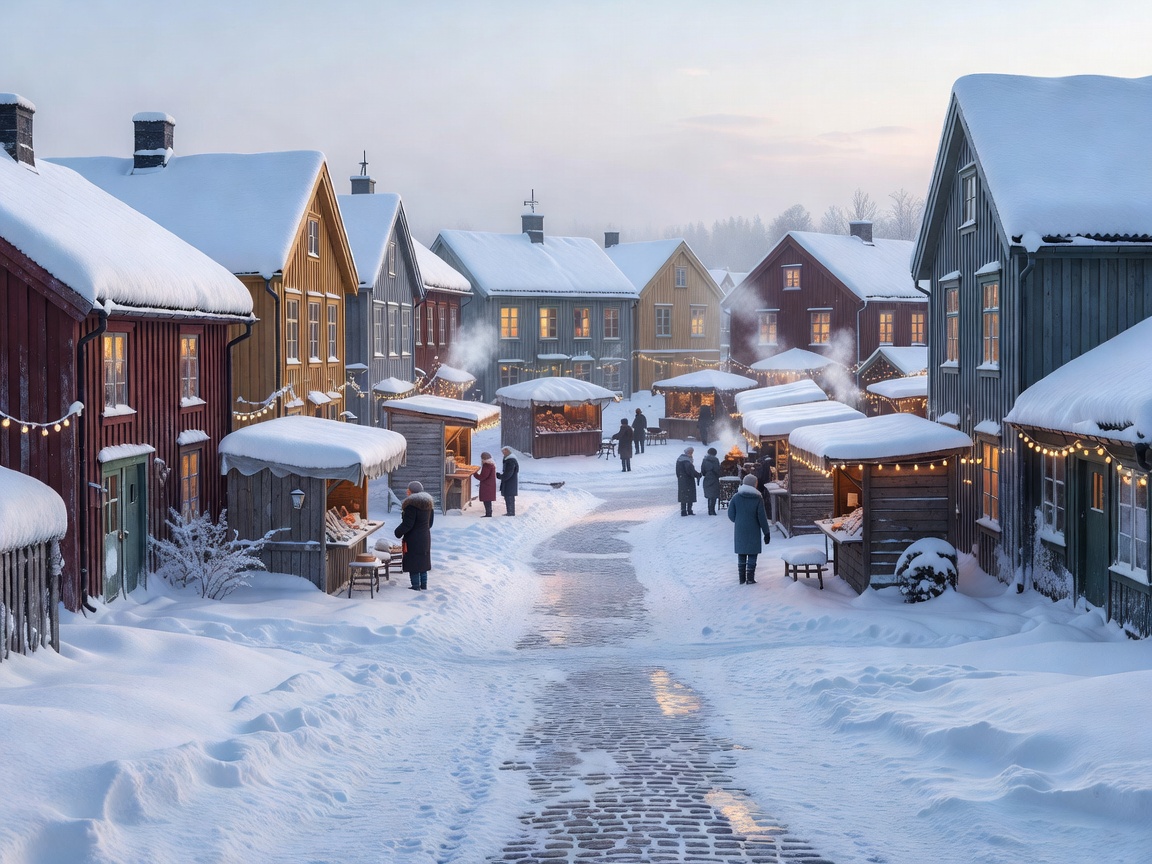
A winter market visit needs more planning than a warm-weather city stop. Seasonal dates can be brief, daylight is limited and conditions can change. This guide sets out questions to resolve before travel. It does not provide live schedules, prices or opening hours. Confirm current details with event organisers, transport providers, accommodation operators and official local information sources.
Choose a destination and set the timing
Choose based on the experience you want: a compact town-centre market, a larger city event, craft-led stalls, regional food or a particular cultural setting. Compare the market’s location with transport links and indoor alternatives. Denmark, Sweden, Norway, Finland and Iceland have different seasonal calendars and winter conditions. Decide whether one destination is more useful than trying to cover several in a short trip.
Many markets operate during Advent and the weeks before Christmas, but start dates, weekdays and opening periods vary. Some events take place only on selected days. A date appearing in last year’s information may not apply this year. Confirm the current season’s schedule before buying non-refundable travel or accommodation. Check again close to departure for changes.
Daylight, weather and clothing
Winter daylight depends on latitude and date. Northern destinations have shorter daylight periods, and sunset comes early compared with summer. Plan outdoor visits around the available light if that matters to you. Check local forecasts and official weather notices shortly before travelling. Snow, rain, wind, ice and thawing conditions can all affect a market visit.
Use layers that can be adjusted indoors and outdoors. A wind-resistant outer layer, warm mid-layer, hat, gloves and suitable socks can make waiting outside easier. Choose closed footwear with a supportive sole and grip. Waterproofing can be useful in wet or slushy conditions. Pack medication, mobility aids and cold-weather equipment that you personally need. Avoid relying on a specific facility or supply unless you have checked it directly.
Transport and accommodation
Map the route from the arrival point to the market and back. Check current rail, bus, ferry or local transit information with the provider. Evening services, holiday schedules, weather disruptions and last departures matter. Allow time to walk between stops and to reach an accessible entrance. Do not assume a town centre is close to every station or that a route remains easy in snow or ice.
Accommodation demand and price vary by place and date. Compare location, cancellation terms, heating, lift access, late arrival arrangements and the route to transport. Book only after checking the event dates that matter to your trip. The market itself may have limited shelter, seating or indoor facilities, so consider nearby options that fit your needs.
Food, budgeting and payments
Make a simple budget for transport, food, market purchases and any admission or activity costs. Prices are set by providers and can change. This guide does not quote current rates. Check payment methods before departure. Contactless cards and mobile payments are common in many places, but individual stalls, transport operators or facilities may have different arrangements. A backup payment method is sensible.
If you have an allergy or dietary requirement, identify what you need to ask before ordering. Stall ingredients, shared equipment and cross-contact practices vary. Check whether an organiser publishes vendor or accessibility details. Carry the information you need to explain a dietary requirement clearly, including translated wording if useful.
Accessibility, crowds and comfort
Ask the event organiser about step-free routes, surface conditions, accessible toilets, seating, quiet areas and parking or drop-off arrangements. Historic squares and temporary market lanes may include cobbles, narrow routes or uneven surfaces. Online descriptions may not cover the details important to an individual visitor. Contact the organiser directly for current, specific answers.
Popular time periods can be busy. Consider visiting earlier in the day or on a quieter date if the schedule allows, while checking opening times first. Identify a meeting point if travelling as a group. Keep children close around hot food counters and crowded walkways. Plan a warm indoor break if a long outdoor visit is difficult.
Good For
Independent travellers, families and groups who want a clear checklist before committing to winter travel.
What To Know
Dates, opening details, prices, public transport and event access can change. This website does not confirm current operational information.
Planning Notes
Verify details with official, current sources. Save key addresses and contact information offline. Recheck weather and transport alerts before setting out.